Over the years my mum has often warned of the dangers of eating too much red and processed meat, but I have never really taken much notice of her advice. However, I started to become interested in the subject when newspaper headlines alluded to a link between certain types of meat and cancer. I questioned whether this was ‘fake’ news and wanted to learn more about the science behind the headlines, so I decided to embark on my own research. I soon realised how confusing and contradictory most of the advice in the media was, so I decided to look more closely at the data. What follows is what I discovered.
Types of meat
I started by looking at the different types of meat. Not all meat is made equally and the quality of the meat can affect its nutrition.
- Conventional Red meat: meat that is red when raw including beef, pork, lamb and goat. Usually comes from factory farmed animals.
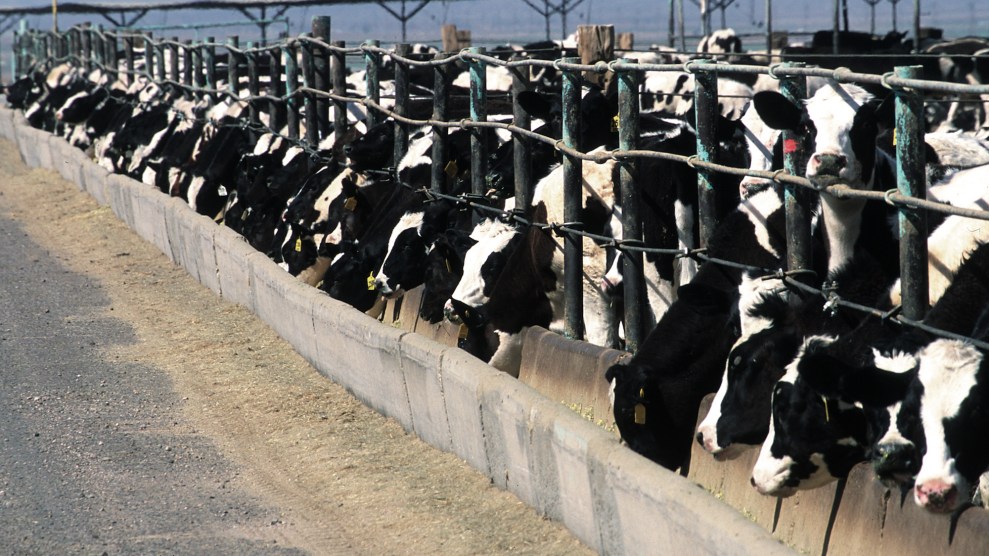
2. Grass-fed, organic red meat: comes from animals that have been reared organically without hormones, drugs or chemicals and fed naturally.

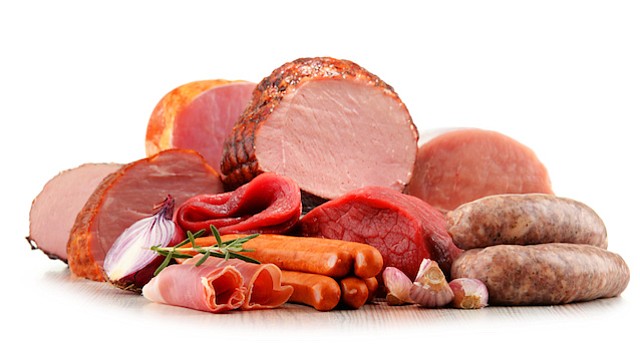
3. Processed meat: meat that has been preserved by salting, curing, smoking, canning or drying. Includes sausages, bacon, ham and salami.
Relationship to bowel cancer
Over the past decade there has been a bombardment of conflicting data regarding the link between processed and red meat and diseases, primarily bowel cancer. Recently, the message has become clearer. In 2018:
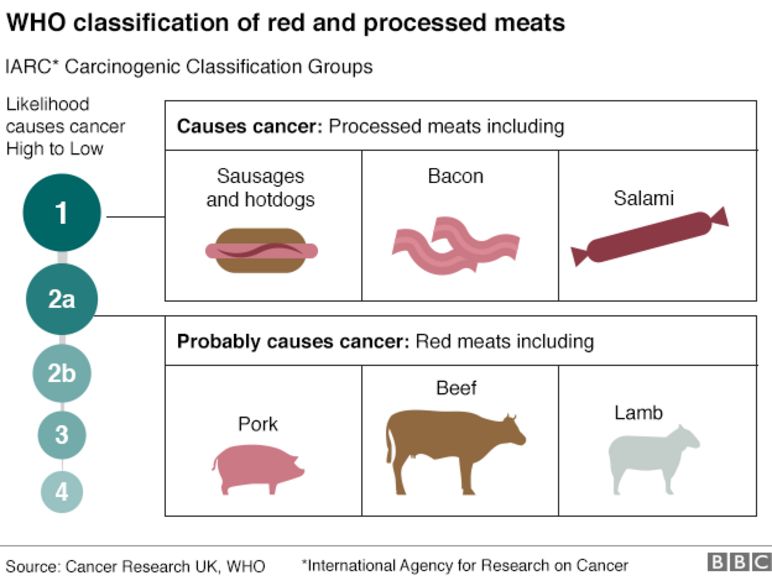
- the World Health Organisation (WHO) report stated processed meats cause cancer and classified them as a group 1 carcinogen.
- red meats were ‘probably carcinogenic’ and classed as group 2a carcinogens, but there was limited evidence.
- WHO states 50g of processed meat a day (less than 2 slices of bacon) increases the chance of colorectal cancer by 18%.
- World Cancer Research Fund states there is strong evidence that processed meat consumption increases the risk of colorectal cancer and that there is probable evidence that red meat increases the risk.
You only have to go as far as Netflix to see how documentaries such as Gamechangers latch onto these figures and try to turn people off meat completely. However, the strength of the evidence has to be questioned. Much of this research is based on observational studies which involve tracking and following what people eat over many years. These studies are therefore subject to confounding bias, as it’s difficult to distinguish the role of one food from all other things eaten. This is why some studies, such as that reported in a BBC news article, believe the majority of people would not benefit from reducing red and processed meat intake as they view the evidence as weak and the risk too small. Others see this as ‘dangerously misguiding’ to the public and it’s clear that the consensus amongst the majority of scientists is that the public should be reducing red and processed meat consumption.
Relative risk vs absolute risk
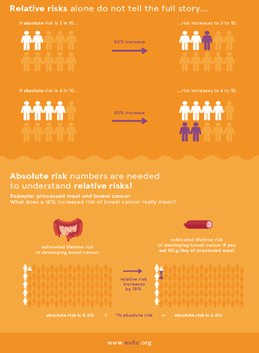
When reading statements like “processed meat consumption causes an 18% risk of bowel cancer” it’s hard not to take this at face value. That percentage is in fact the relative risk, and has nothing to do with the actual risk which is the most important statistic. To put this more clearly, in the UK around 6 in 100 people will get bowel cancer at some point in their lives. That is the actual risk. If these people were then given an extra 50g of bacon every day for the rest of their lives the risk would increase by 18% (relative risk). Now, around 7 in 100 people will get bowel cancer (actual risk). That’s just one extra case of bowel cancer in all those 100 lifetime-bacon eaters. Though still having an impact, it’s far less harmful than other carcinogens such as tobacco and alcohol. It’s estimated that a high processed meat diet causes 34,000 cancer deaths a year compared to 1 million caused by smoking and 600,000 attributed to alcohol. Eating the odd bacon sandwich will cause much less damage than smoking the odd cigarette.
Are chemicals in meats carcinogenic?
The exact chemicals that make these meats carcinogenic has not been pinpointed, but researchers believe they could be:
Haem: the red pigment found naturally in red meat. Scientists have found that it can break down in our gut and form ‘N-nitroso compounds’. These chemicals damage the DNA of the cells that line the digestive system. No-one has proved that people with high levels of N-nitroso compounds in their stools actually have a higher chance of developing bowel cancer, which might be why why red meat is just a ‘probable’ risk.
Nitrates and nitrites: These chemicals are added as a preservative to keep processed meat fresh. When consumed, nitrites can be converted into N-nitroso compounds which are cancer causing. This might be the reason processed meats are more strongly linked to bowel cancer than red meats.
Heterocyclic amines (HCAs) and polycyclic amines (PCAs): when meat is cooked at high temperatures, such as grilling and barbecuing, HCAs and PCAs are produced. They can damage cells in the bowel.
Any health benefits?

Although I’ve highlighted the dangers of over consuming red and processed meat, very few experts recommend giving red meat up totally. Following publication of the 2018 WHO research, Cancer Research UK advised people to cut down rather than give up red and processed meat as they can still offer health benefits. Lets take a 100g portion of raw ground beef (10%) fat. This contains:
- Iron (12% of RDA)
- Zinc (44% of RDA)
- Vitamin B12 (92% of RDA)
- Vitamin B6 (28% of RDA)
- Smaller amounts of lots of other vitamins and minerals
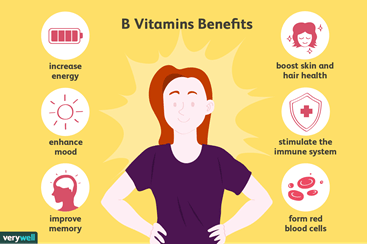
Vitamin B12 is especially important as it is difficult to obtain from plant-sources but is essential for cognitive function and maintaining healthy red blood cells and nervous system.
Recommendations
The NHS guidelines are:
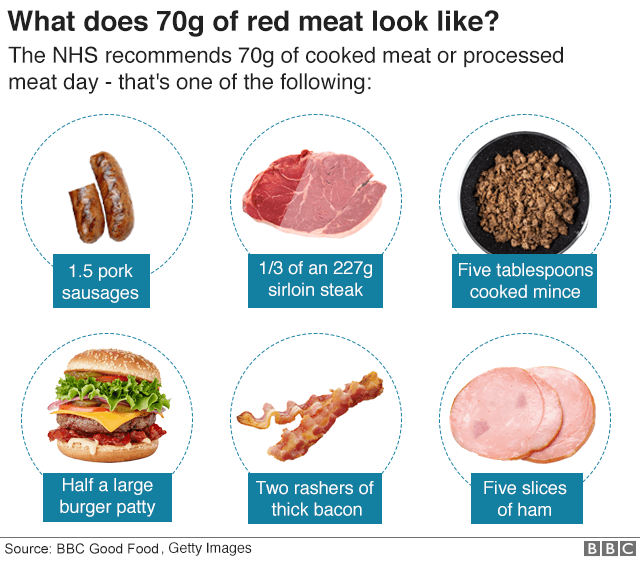
- eat no more than 70g red and/or processed meat per day. This is equivalent to 2 rashers of bacon
- those who eat more than 90g red and processed meat a day to cut down to 70g
- You can down on red and processed meat by eating them in smaller portions, having meat free days and replacing them with chicken, fish or vegetarian alternatives
Having sifted through a lot of data I will continue to live by my mum’s famous motto: ‘everything in moderation’. I think as long as you limit your processed and red meat consumption whilst also maintaining a balanced diet rich in fruit and vegetables, the odd bacon sandwich is fine! And in my opinion when it comes to red meat it’s beneficial to eat small portions in moderation, providing lots of important vitamins and minerals.
 Anna's Blog